Why a Lucky Charm Is Not a Cultural Dictionary
Learn how a lucky charm in a casino scene shapes tension through a character’s choices, without treating a private keepsake as a shared custom.
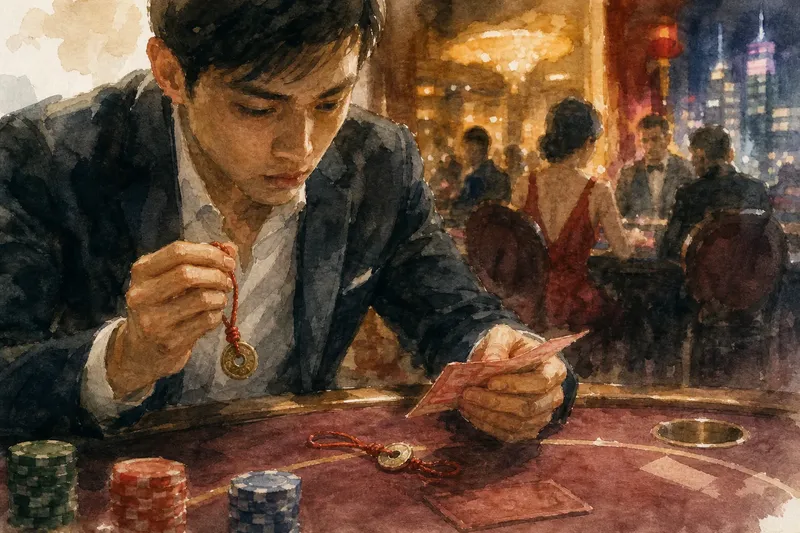
When a lucky charm appears in a casino scene, what should you say it means? Start with what changes in the action: a character may touch a red cord before placing a ticket, then keep it hidden while deciding whether to continue. Those choices can shape the scene’s tension without making the object a symbol shared by everyone around them.
How does the charm change the scene?
Watch for its effect on timing and attention. A character who pauses to take a pendant from a pocket interrupts the flow of a wager; one who leaves a keepsake untouched may seem reluctant to draw attention to it. These actions shape the moment, even when the story gives no explanation of the object’s origin.
Notice what the camera and editing do around the prop. A close-up can direct attention to a clenched hand, while a cut from the charm to a ticket can place the two objects in the same dramatic beat. Describe that arrangement and its effect on the scene rather than treating the camera’s emphasis as proof of a particular belief.
For example: “She turns the pendant over, then sets down her ticket.” This records an action the audience can see. A later sentence can interpret the pause as hesitation if the surrounding performance supports it.
What does a Hanoi setting establish?
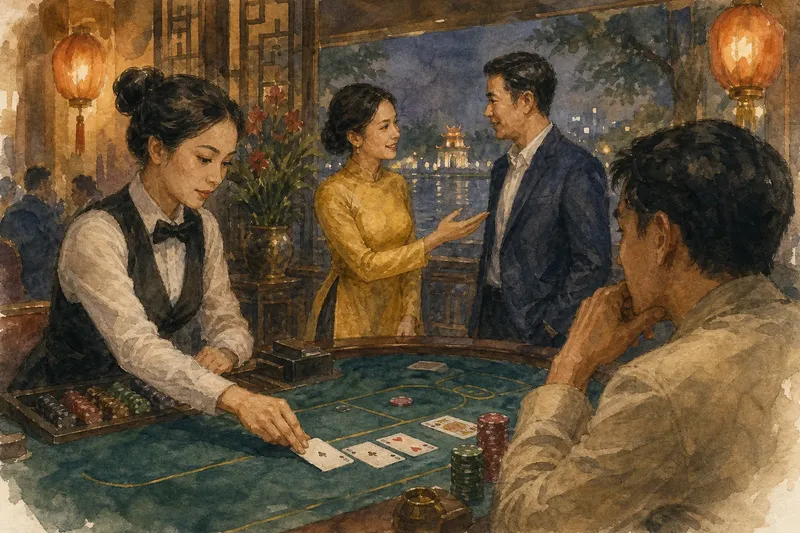
A story set in Hanoi locates its events; the location alone does not make a charm a local symbol. The scene would need to connect the object to a named place, practice or character’s account before you could make that more specific claim.
Keep the character’s personal history distinct from the city around them. If dialogue says that a relative gave them the charm, you can describe it as a family gift within that story. Do not turn one character’s account into a claim about Hanoi residents generally.
Which sources can support a cultural interpretation?
Match the source to the claim. A museum catalogue may describe an object in a particular collection; it cannot, by itself, establish what a similar prop means in a contemporary fictional scene. A community organisation’s account may explain a practice from its members’ perspective, while a specialist text may provide historical context.
Record who is speaking, which place or period they discuss, and whether their account concerns the same object or practice. If the match is partial, make the claim narrower. The story itself may leave the charm unexplained, and that can be the most accurate reading.
What do readers ask about a lucky charm in a casino scene?
Does the charm’s colour have a fixed meaning?
No single meaning follows from colour alone. Describe the colour, then connect it to a particular association only when the character, story or relevant source makes that connection.
Can a charm suggest luck without being religious?
Yes. It might be a gift, a keepsake or a private reminder. Its appearance does not tell you which explanation applies.
Does a close-up prove the character believes in the charm?
No. A close-up shows that the film draws attention to the object. Look to dialogue and behaviour for evidence of the character’s belief; if the story provides none, leave that belief unstated.
What if the story never explains the charm?
Describe its place in the action and how the character handles it. You can say it appears personally significant if the performance supports that reading, while leaving its origin open.
How can you make a careful interpretation?
Build the claim from the scene’s sequence: what happens before the charm appears, what the character does with it, and what follows. Then check whether the story or a relevant source supports any cultural explanation you want to add.
Imagine an invented scene with a visitor, a red cord and a ticket. At the start, the visitor holds the cord in one hand and the ticket in the other, then places both on the table before deciding whether to wager. The action makes the two objects part of the same pause, but it does not explain why the visitor carries the cord.
Next, imagine the visitor folds the ticket and puts it away, while the cord stays on the table. That visible change separates the keepsake from the immediate decision. A careful reading could say that the scene shifts attention from the visitor’s preparation to the unresolved cord; it should not call the cord lucky or inherited unless the story supplies that information.
Use these checks when deciding how far your wording can go:
- Observation: Dialogue names a place or community. If it also links the charm to a practice, then describe that stated link; otherwise treat the place as setting and avoid calling the object a local tradition.
- Observation: A character calls the object lucky. If the line expresses that character’s view, then attribute the belief to them; otherwise describe the object without declaring it lucky.
- Observation: A source names a group, period and use. If those details match your claim, then keep the interpretation within that context; otherwise narrow the claim or seek a better-matched source.
- Observation: A source discusses a historical practice. If your sentence concerns that period, then use it for historical context; otherwise do not treat it as evidence of present-day belief.
- Observation: The charm recurs in several scenes. If its handling changes alongside a character’s decision, then describe that dramatic relation; otherwise report its recurrence without assigning it a function.
- Observation: A source gives one person’s account. If your sentence concerns that person’s understanding, then attribute the account to them; otherwise do not generalise it to a whole community.
A lucky charm in a casino scene can influence pacing, focus and a character’s hesitation without carrying a universal cultural meaning. Keep the interpretation tied to what the story shows, and let its unanswered details remain unanswered when neither dialogue nor a well-matched source settles them.