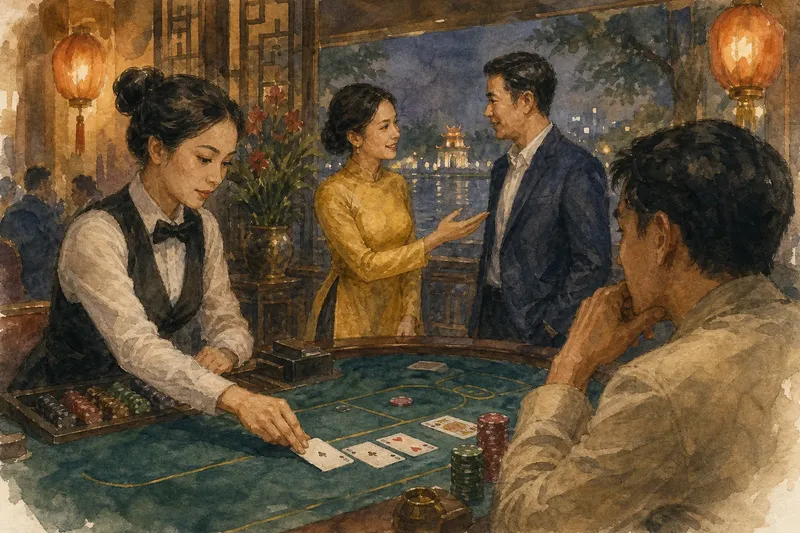
A Film Club Evening Built Around Casino Rituals
Plan a casino film club evening with a welcoming arrival ritual, shared viewing customs and a closing conversation that gives every guest a clear role.
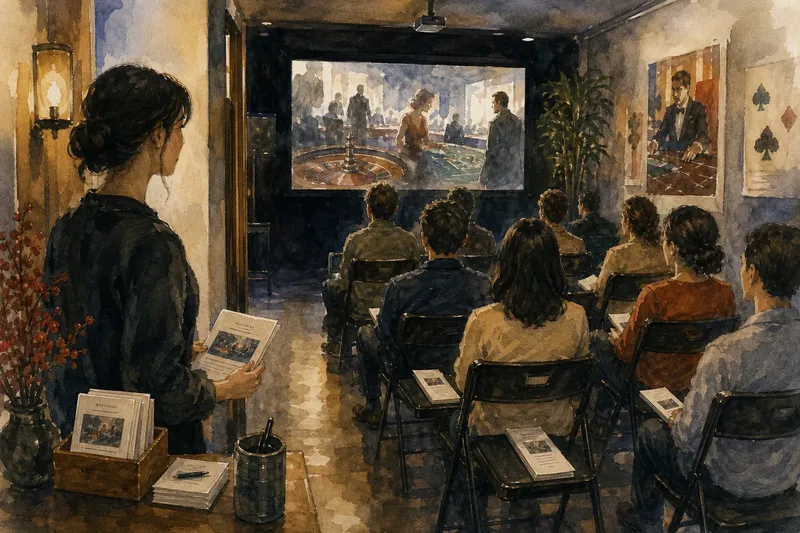
For a casino film club evening, decide what guests will do together before the film begins: how they arrive, take their seats and mark the shift from conversation to screening. A few simple, optional rituals can give the gathering a shape without turning it into a game or asking anyone to imitate gambling.
What rituals should a casino film club evening include?
A ritual is a repeated action that gives a moment shared meaning. At a film club, it might be greeting each guest at the door, offering a choice of seat, or inviting everyone to place a paper programme beside them before the lights dim.
Keep the actions distinct from casino play. Avoid wagering, simulated betting or prizes tied to guesses about the film. The evening can explore how cinema represents casinos while making its own customs about welcome, attention and conversation.
For a Hanoi cultural programme, offer a ritual as an invitation rather than a claim about local custom. Guests may bring different experiences of public venues and film-going; no single response should stand in for the city.
How can guests move from arrival to screening?
Use a short sequence that is easy to understand and does not require special knowledge:
- Welcome at the door: Tell guests where to sit and where to leave coats or bags. If the route is clear, let people settle themselves; if it is crowded, ask a host to guide arrivals and keep the entrance open.
- Offer a programme card: Include the film title, a brief content note where appropriate, and one optional prompt. If guests want context, the card provides it; if they prefer to watch without prompts, they can set it aside.
- Mark the start: Invite the group to pause conversation and turn towards the screen. If everyone is ready, dim the lights and begin; if someone needs assistance or the room is unsettled, wait briefly before starting.
- Keep the screening uninterrupted: Set aside discussion for after the film unless a planned break is essential. If the story relies on suspense, screen it continuously; if the programme uses a short excerpt, choose a natural scene break in advance.
- Close with an optional round: Invite each person to share one moment that stayed with them. If a guest would rather pass, move on without asking for a reason; if conversation is lively, allow time for replies.
Make each action optional where participation could feel exposing. A ritual works best when guests understand what is happening and can join without pressure.
What should the room and host provide?
Arrange chairs so guests can see the screen, and check that the entrance and walking routes remain unobstructed. A small table near the door can hold programme cards, pens and a clearly marked place for unused materials. Keep lighting low enough for viewing, but not so dark that guests cannot move safely.
The host’s words matter more than elaborate decoration. A simple welcome can explain the order of the evening, say that note-taking and discussion are optional, and remind the group that the event is about the film rather than real-money play.
- If guests cannot see the screen from their seats: Check sightlines from the back and sides. If faces or subtitles are blocked, rearrange chairs before the screening; if the view is clear, leave the layout in place.
- If the room has a narrow entrance: Check whether people must pass through the seating area to enter. If arrivals would disturb the screening, keep the door open for a settling period and begin once guests are seated; if access remains easy, use the planned start time.
- If the programme card feels crowded: Check whether the film details and participation options are easy to find. If they are not, remove decorative text and keep the practical information; if they are clear, retain the design.
- If guests may not want to speak aloud: Check whether the closing round requires everyone to contribute. If it does, make passing explicit or offer a written response instead; if sharing is already optional, keep the format.
- If the screening includes a break: Check whether the pause falls between scenes. If it interrupts an important moment, move it to a natural boundary or remove it; if the story has reached a clear pause, announce the break before the film begins.
- If the event includes casino imagery in its decorations: Check whether any item resembles a betting prompt or prize. If it could encourage wagering, remove or replace it with neutral film materials; if it is simply a visual reference, explain its connection to the screening.
How can the evening stay welcoming and clear?
Use plain language to distinguish the film’s fictional casino from the event itself. Do not ask guests to disclose personal gambling experiences. If the film includes distressing material, share a concise content note beforehand and let people step out without drawing attention to them.
Offer more than one way to take part. A guest can listen, write a response on a card, or leave without speaking. If the discussion is held in English alongside other languages, avoid treating fluency as a measure of interest; allow a quiet pause and give people time to form a thought.
Imagine a host preparing a screening for a small group in a room with a narrow entrance and a single row of movable chairs. The host checks the sightlines and finds that two seats are blocked, so those chairs are shifted to the side; guests can then see the screen. They place a programme card at each seat, explain that the closing round is optional, and begin only after late arrivals have found places. After the film, one guest passes, another shares a scene, and the host accepts both responses without pressing for more. The resulting evening has a clear rhythm while leaving each person control over participation.
What questions do hosts ask about casino film rituals?
Should guests dress in a casino theme?
No dress code is needed for a film club ritual. If a theme is offered, make it optional and avoid suggesting that guests must buy or borrow anything to belong.
Should the host interrupt the film to explain a casino scene?
Usually, save explanations for before or after the screening so viewers can follow the film’s rhythm. If a break is necessary, choose a scene boundary and tell guests about it in advance.
How can a guest take part without speaking?
Offer listening, passing, or writing a brief response as equally acceptable choices. The host should move on without asking a guest to explain their choice.
Can casino-themed tokens be used as invitations?
They can be used as neutral markers only if they do not invite betting, exchange or prize-seeking. If their meaning could be unclear, use paper programme cards or ordinary name cards instead.
How should the evening close?
End with one consistent, low-pressure action, such as returning programme cards to a table or inviting guests to offer a final word about the screening. Thank the group, explain where to find any follow-up information, and leave time for people to gather their belongings without rushing.
When planning another casino film club evening, keep the arrival, viewing and closing customs simple enough to repeat, but allow the film and the group to shape the conversation. A clear invitation, an easy way to pass and a calm ending are often all the ritual the room needs.